

Technology Summaries
The intent of these summaries is for each to be a high-level overview, giving a few main points and some corrections to common misconceptions, and to point readers to further documentation for more detail. The idea came from seeing the common misconceptions and thinking that it would be good for M3AAWG to do some one-page summaries of relevant technologies to steer people in the right direction. They are also not meant to be comprehensive, but just to cover some key points.
 WHOIS and RDAP
WHOIS and Registration Data Access Protocol (RDAP) are online directories that identify who is associated with specific domain names, IP addresses, and autonomous system numbers (ASNs). In many cases, public WHOIS data is required1 to be provided and maintained accurately.

IPv6
Every device on the internet needs an address to communicate with other internet devices. The original addresses, called IPv4, are 32-bit numbers, usually written as four decimal parts separated by periods, such as 198.51.100.1. The supply of public IPv4 addresses has largely been exhausted, even though demand for internet addresses continues to increase.
IPv6 provides one way of meeting this growing demand.
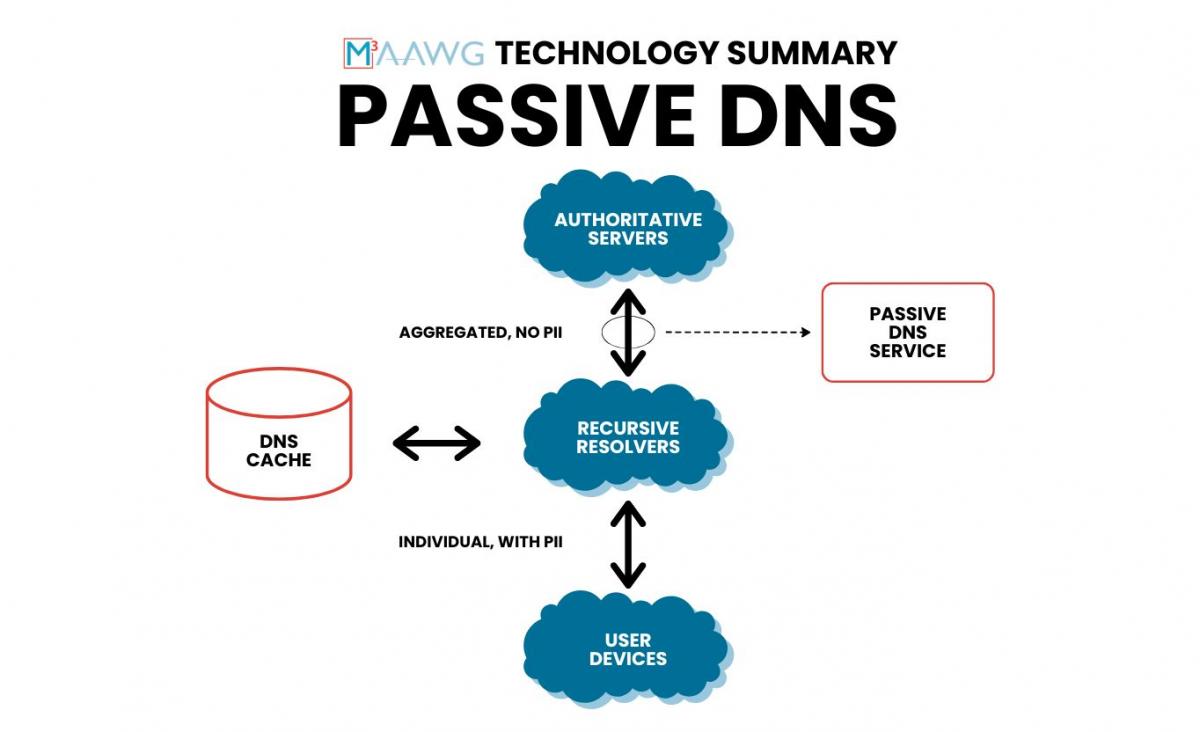
Passive DNS
The term “passive DNS” refers to the process of passively collecting successful DNS lookups and responses. It is called passive because it doesn’t involve actively probing the DNS, just logging queries and responses that are organically happening.

DMARC (Domain-based Message Authentication, Reporting, and Conformance)
DMARC is a mechanism that uses the email authentication protocols DKIM and SPF to ensure that the use of a domain in the “From” line of an email message, or the sender address, is authorized by the domain owner
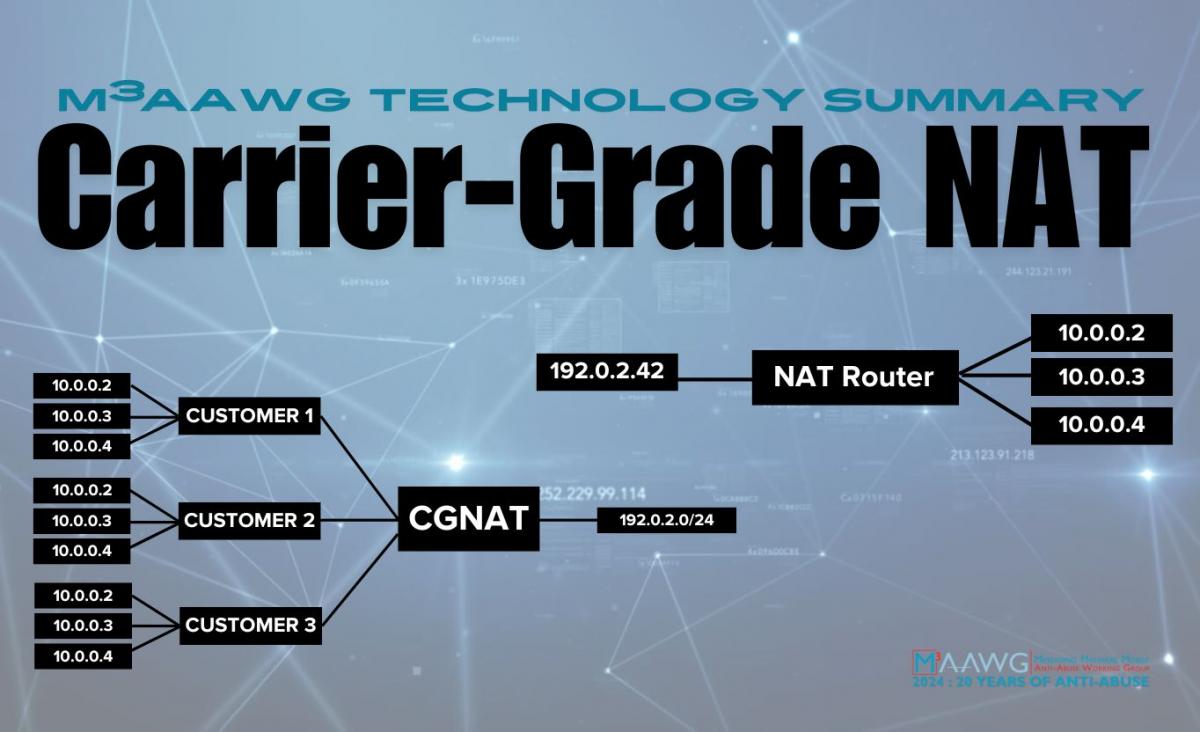
Carrier-Grade NAT
This M3AAWG Technology Summary provides clarity on what Carrier-Grade NAT is and the issues that surround it.
Sender Policy Framework (SPF)
SPF is an email authentication protocol that checks which IP addresses are authorized to send mail on behalf of the originating domain.

Domain Keys Identified Mail (DKIM)
DKIM is an email authentication protocol that creates an association between a domain and the messages it sends using digital signatures. A sequence of messages signed with the same domain name is assumed to provide a reliable base of information about mail associated with the domain name’s owner, which may feed into an evaluation of the domain’s reputation.
Email Authentication
Email authentication involves one or more technical processes used by sending and receiving mail systems to verify the email originated with an authorized domain name server and is received in a valid format. Email authentication creates signals about the mail that can be used in spam filtering and other mail handling decisions, and may even point to fraudulent senders.